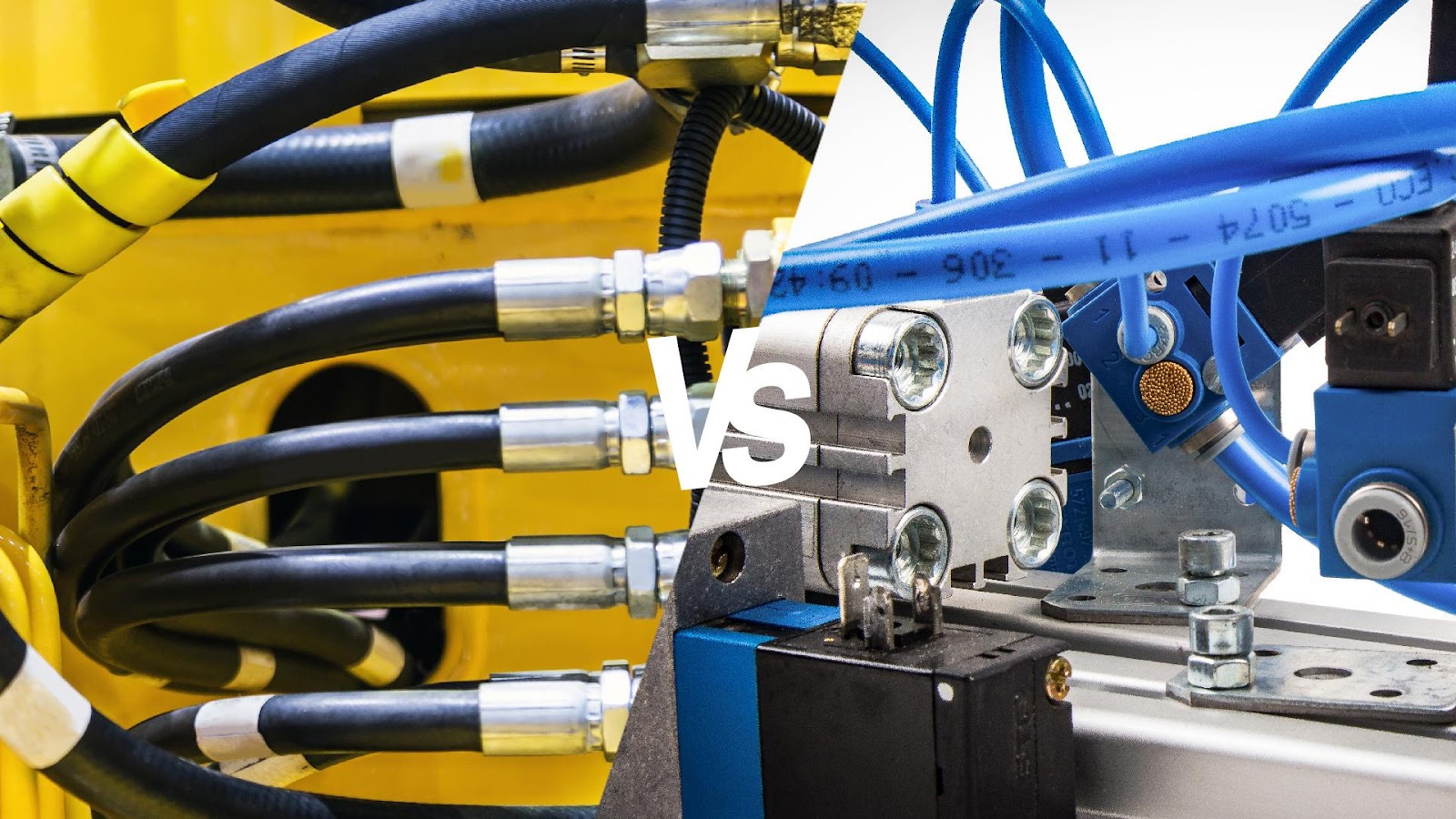
Hydraulic vs Pneumatic Systems: Key Differences and Applications
Hydraulic and pneumatic systems are widely used in industrial equipment and automation. Both systems use fluid power to transfer energy and control machinery, but they operate differently and are suited to different applications.
Understanding the differences between hydraulic and pneumatic systems can help businesses select the appropriate solution for their equipment.
What Is a Hydraulic System?
Hydraulic systems use pressurized liquid, commonly hydraulic oil, to transmit power.
Because liquids are nearly incompressible, hydraulic systems can generate high forces and provide precise control. They are commonly used in heavy machinery, industrial equipment, construction equipment, lifting systems, and manufacturing applications.
Hydraulic systems typically include components such as:
- Hydraulic pumps
- Hydraulic hoses
- Valves
- Cylinders
- Filters
- Fittings
- Hydraulic motors
What Is a Pneumatic System?
Pneumatic systems use compressed air to transmit energy. They are widely used in automation, manufacturing, assembly lines, packaging equipment, and other industrial applications.
Typical pneumatic components include:
- Air compressors
- Pneumatic cylinders
- Control valves
- Air preparation units
- Pneumatic hoses
- Fittings
- FRL units
Hydraulic vs Pneumatic: Main Differences
Power and Force
Hydraulic systems are generally preferred when high force is required. Pneumatic systems are commonly used for lighter and faster mechanical movements.
Operating Medium
Hydraulic systems use liquid, usually hydraulic oil, while pneumatic systems use compressed air.
Speed
Pneumatic systems can provide fast movement, making them suitable for many automation applications. Hydraulic systems can also provide controlled movement and high force where heavy loads are involved.
Maintenance
Both systems require regular inspection and maintenance. Hydraulic systems require attention to fluid condition, hose integrity, leaks, and pressure. Pneumatic systems require proper air quality, leak prevention, filtration, and lubrication where applicable.
Applications
Hydraulic systems are commonly found in heavy-duty equipment and applications requiring high force.
Pneumatic systems are frequently used in automation, manufacturing, material handling, and applications requiring rapid repetitive movement.
Which System Should You Choose?
The right system depends on the application. Factors such as required force, speed, operating environment, available space, maintenance requirements, and equipment design should be considered before selecting hydraulic or pneumatic components.
In many industrial facilities, both hydraulic and pneumatic systems may operate together, with each technology performing the tasks for which it is best suited.
Why Component Quality Matters
Whether using hydraulic or pneumatic equipment, the quality of hoses, fittings, cylinders, valves, and other components directly affects system reliability.
Correct component selection and professional installation can help reduce leaks, failures, maintenance costs, and unnecessary equipment downtime.
Conclusion
Hydraulic and pneumatic systems both provide efficient methods of powering and controlling industrial equipment. Hydraulics are typically preferred for high-force applications, while pneumatics are well suited to fast, clean, and repetitive industrial operations.
Understanding the requirements of your application is the first step toward selecting the right system and components.